What Fire Sprinkler Bulb Colors Really Mean (and Why They Matter)
Sprinkler bulb colors show the temperature that sets each head off. See the color chart, why the right rating matters, and when to have heads checked.

Five overlooked home fire hazards and how to fix them, how ionization and photoelectric smoke detectors work, and why monitored detectors matter when away.
The most overlooked home fire hazards are devices left plugged in, clogged dryer vents, overloaded power strips, unattended candles, and old or damaged wiring, and each one has a quick fix. Smoke detectors are your early warning if a fire starts anyway: ionization detectors sense fast, flaming fires, photoelectric detectors sense slow, smoldering fires, and monitored detectors get help moving even when nobody is home. This guide covers the hazards, how smoke detectors work, and holiday safety for Las Vegas and Phoenix homes.
Most families think about smoke detectors and candles. The bigger risks are often the everyday things nobody looks at twice.
Many electronics, such as TVs, chargers, and computers, keep drawing power when they are "off" but still plugged in. That standby power can build heat in outlets and cords, especially in low-quality chargers or crowded outlets.
Fix it: Unplug chargers and small appliances when you are not using them, or use smart power strips that cut power completely. It is a simple habit that reduces risk and can trim your energy bill too.
Lint is highly flammable. A clogged dryer vent traps heat, makes the dryer overheat, and can ignite the lint inside the duct.
Fix it: Clean the lint screen every load and have the vent duct cleaned regularly. Watch for warning signs: clothes taking longer to dry, a dryer that is hot to the touch, or an outside vent flap that does not open. Make sure the vent exhausts all the way outside, not into a wall or attic.
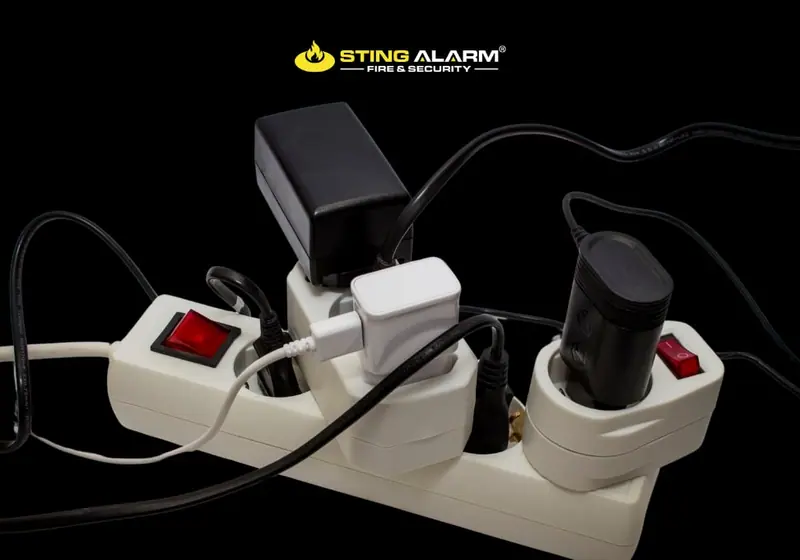
Power strips are useful until they become fire starters. Plugging too many high-draw devices into one strip, chaining strips together, or running cords under rugs can cause overheating and short circuits.
Fix it: Spread devices across different outlets, never daisy-chain power strips, and never run cords under rugs or furniture. Use quality strips with built-in surge protection, and replace any cord that is frayed, cracked, or warm to the touch.
Candles are cozy, but it is easy to forget one is burning or set it too close to curtains, paper, or decorations.
Fix it: Put candles on stable, heat-resistant surfaces, keep them well away from anything that can burn, and blow them out when you leave the room or go to sleep. Better yet, switch to flameless LED candles that give the same glow without the flame.
You rarely see your wiring, but frayed wires, loose connections, overloaded circuits, and amateur electrical work can all start fires inside walls.
Fix it: Call a licensed electrician if you notice flickering lights, breakers that trip often, outlets or switch plates that are warm, or a burning smell. Have older homes and any DIY electrical work inspected before a problem shows up.
Smoke detectors are easy to take for granted until they chirp at 2 a.m. Inside, they are doing one job: sensing smoke early enough to give you time to get out. There are two main technologies.
An ionization detector uses a very small amount of radioactive material to create a tiny electrical current between two plates inside a chamber. When smoke particles enter the chamber, they disrupt the current, and the alarm sounds. Ionization detectors respond faster to fast, flaming fires, which produce smaller smoke particles. Think of a fire that starts in paper or a pan of grease.
A photoelectric detector has a light source and a light sensor inside a chamber, aimed so the light normally misses the sensor. When smoke enters, it scatters the light onto the sensor, and the alarm sounds. Photoelectric detectors respond faster to slow, smoldering fires, which produce larger smoke particles. Think of a cigarette smoldering in a couch cushion or bedding.
Because you cannot predict which kind of fire you will have, many homes use both types or combination detectors that include both technologies. Heat detectors respond to high temperature or a rapid rise in temperature and are useful where smoke detectors cause nuisance alarms, such as garages and some kitchens.
A standalone smoke alarm does one thing: it beeps inside the house. That works if someone is home, awake, and able to respond. It does nothing if you are at work, on vacation, or out for the evening, and it cannot help a pet or a family member who cannot get out alone.
Monitored smoke and heat detectors connect to your security panel. When one goes off, the signal goes to our monitoring center, which can request emergency response and notify you on your phone. That is the difference between coming home to a smoke-damaged kitchen and coming home to a house the fire department reached in time.
How it fits together with a Sting Alarm system:
Learn more about home security monitoring and the life safety sensors available with a smart home security system.
The holidays add new fire hazards: more cooking, more candles, more lights, and more distractions. Keep these tips in mind from Halloween through New Year's.
Cooking is the biggest one. According to the U.S. Fire Administration, "cooking is, by far, the leading cause of home fires and home fire injuries," and U.S. fire departments responded to 170,000 home cooking fires in 2021. The leading factor in nonconfined home cooking fires was unattended equipment.

Fire safety comes down to two things: remove the hazards you can, and make sure you are warned fast if a fire starts anyway. Unplug what you are not using, clean the dryer vent, give your power strips and candles a second look, and add monitored smoke and heat detection that works whether you are home or not. For more ways to keep your household safe, read our guide to home safety for families.
Ready to add monitored fire detection to your home? Call (702) 737-8464 in Las Vegas or (602) 431-1300 in Phoenix, or request a free quote.
Most home smoke detectors use one of two methods. Ionization detectors pass a small electrical current through a chamber, and smoke particles disrupt it. Photoelectric detectors shine a light inside a chamber, and smoke scatters the light onto a sensor. Either change sets off the alarm.
Ionization detectors respond faster to fast, flaming fires, and photoelectric detectors respond faster to slow, smoldering fires. Because you cannot predict which kind of fire you will have, many homeowners use both types or combination detectors that include both.
A regular smoke detector only sounds an alarm inside the house, so it helps only if someone hears it. A monitored smoke or heat detector also reports through your security panel to our monitoring center, which can request emergency response and notify you, even when nobody is home.
Cooking. The U.S. Fire Administration says cooking is, by far, the leading cause of home fires and home fire injuries, and unattended cooking equipment is the leading factor in nonconfined home cooking fires.
Clean the lint screen every load and have the vent duct cleaned regularly, more often if drying takes longer than usual, the outside of the dryer gets hot, or the vent flap does not open when the dryer runs. Make sure the vent exhausts all the way outside.
Many devices draw some power even when turned off. Unplug chargers and small appliances you are not using, use quality power strips instead of overloading outlets, and replace any cord or plug that feels hot, is frayed, or is damaged.
Sprinkler bulb colors show the temperature that sets each head off. See the color chart, why the right rating matters, and when to have heads checked.
Keep medicines away from kids and out of the wrong hands. Simple medicine cabinet safety steps, plus how a contact sensor alerts you when the cabinet opens.
What security a medical office needs: access control, video, after-hours protection, fewer false alarms, and monitored fire alarms, from one local team.
Tell us about your home and a local security expert will help you add fire detection that reaches our monitoring center.
★★★★★ Isaac and Isaac from Sting were amazing!!! They showed up on time and even got the installation done before the quoted time. Isaac explained how the system worked in detailed and set up my cameras and doorbell without any issues. I would recommend Sting to anyone looking to upgrade their security system and ask for Isaac.
★★★★★ Sting Alarm has been great to work with. Had an issue that needed a field tech to come out. Mike was dispatched and worked on the issue - quickly identifying the issue and resolving it for me. Friendly and great service!
★★★★★ From the beginning, Sting Alarm has been so easy to work with. From Jeff in Sales, to scheduling, and finally when our tech came out in a Saturday for the installation, everything was seamless. Our tech Isaac was fantastic. He was neat and cleaned up after the installation, and took time with me and my husband to get us set up on the app. He was patient, walking us through all the features.… Read on Google