
Remote Guarding in Las Vegas
Most cameras record what already happened. With remote guarding, trained operators watch your property live, warn trespassers through on-site speakers, and coordinate law enforcement while the incident is still developing.
- Live operators, not automated alerts
- Typically 60 to 80% less than a full-time on-site guard
- Las Vegas and Phoenix coverage
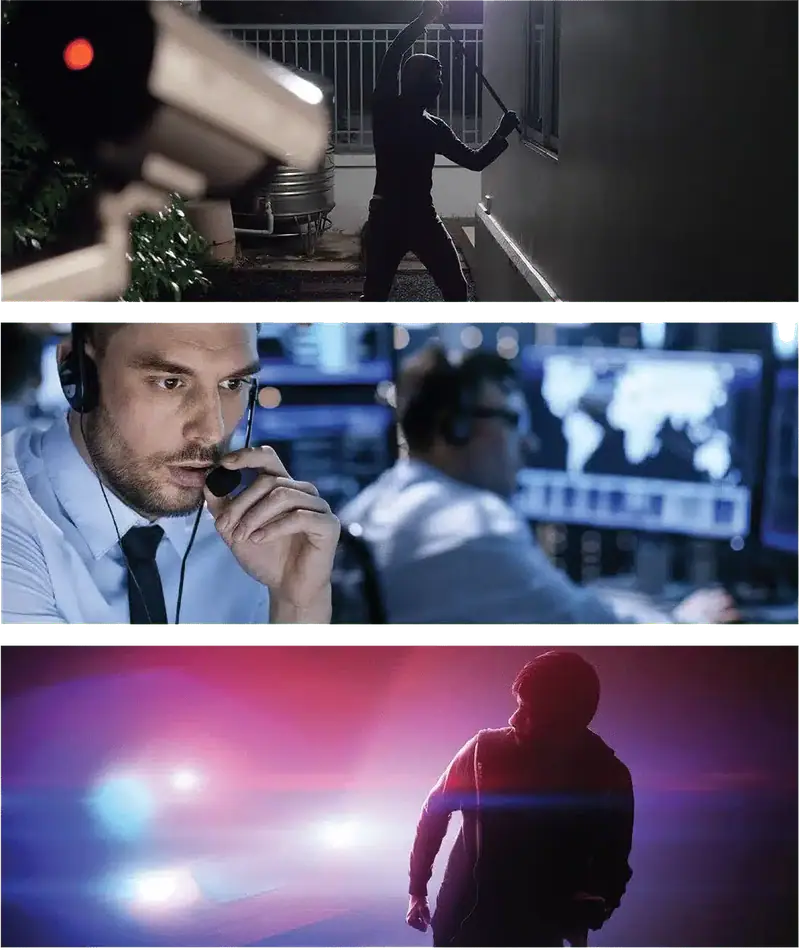
Remote guarding is live, professional security for your property: trained operators watch your cameras in real time, issue direct audio warnings to anyone who should not be there, and coordinate law enforcement before a theft becomes a loss. Sting Alarm provides remote guarding for businesses across Las Vegas and Phoenix. It is not automated. Every intervention is a real person making a real judgment call.
How remote guarding works
- Activity detected. Video analytics on your cameras flag a person or vehicle in a defined area during guarded hours, while filtering out routine motion.
- Operator alerted. A trained operator immediately sees the live video and assesses what is happening.
- Live audio warning. The operator speaks directly to the person through on-site speakers and tells them to leave, so they know a live person is watching.
- Response coordinated. If the person does not leave or a crime is in progress, the operator contacts law enforcement and your designated contacts with live video of what is happening, and every event is documented.
Why alarms alone fall short in Las Vegas
A traditional alarm tells you something tripped. It does not tell anyone what is happening. The Las Vegas Metropolitan Police Department, which covers the City of Las Vegas and unincorporated Clark County, explains in its official FAQ that it only broadcasts burglar alarm calls: an available officer in the area might respond by choice, but a unit is not dispatched.
Remote guarding changes the call. When our operator contacts law enforcement, they are reporting what they can see on live video, not just a tripped sensor. The difference between a camera that records a break-in and a system that stops one starts here. Learn more about video verification.
Replace guards, not coverage
Remote guarding typically costs 60 to 80% less than a full-time on-site security guard. It also covers more ground. An on-site guard can only be in one place at a time. Remote guarding watches your entire property at once: parking lots, entry points, storage yards, fence lines, and loading docks. When seconds matter, a live operator with a loudspeaker and law enforcement on the line is a strong alternative to a guard walking the perimeter.
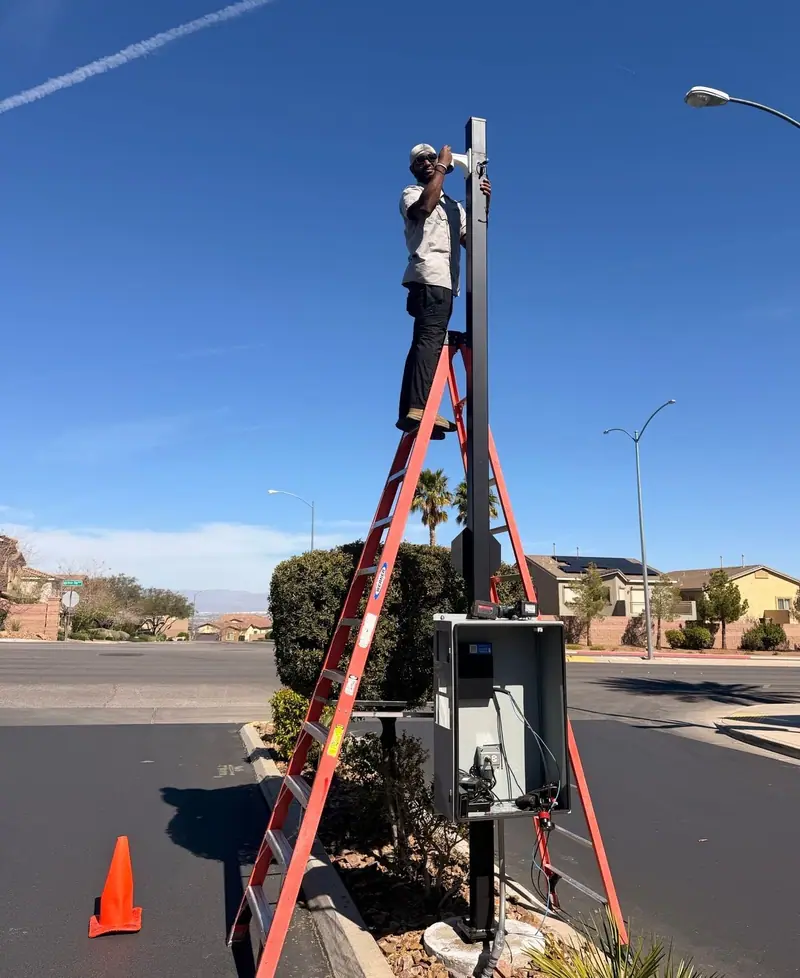
What is included
- Video analytics that filter routine motion and flag real threats such as perimeter breaches, loitering, and after-hours activity, reducing false alarms and alert fatigue.
- Live operators watching during the hours you choose, up to 24 hours a day, 7 days a week.
- Real-time audio intervention through on-site speakers.
- Law enforcement coordination backed by live video of the incident.
- Incident documentation with time-stamped video and event logs for reporting, insurance, and compliance needs.
- Mobile access to live and recorded video from anywhere.
- Gate entry and exit verification for controlled-access properties.
- Integration with existing cameras in many cases, so a full system replacement is not required.
Who uses remote guarding
- Construction sites: equipment and materials are exposed once crews leave.
- Car dealerships: large lots full of inventory after hours.
- Warehouses and equipment yards: big outdoor areas that fixed alarms cannot cover well.
- Retail properties and shopping centers: loitering, vandalism, and after-hours break-ins.
- Multi-family communities and HOAs: pools, amenities, and parking areas. One live warning from an operator can clear a restricted pool area in seconds, with no escalation and no damage.
- Office campuses and multi-location businesses: consistent coverage across every site. See multi-location business security.
Already have cameras?
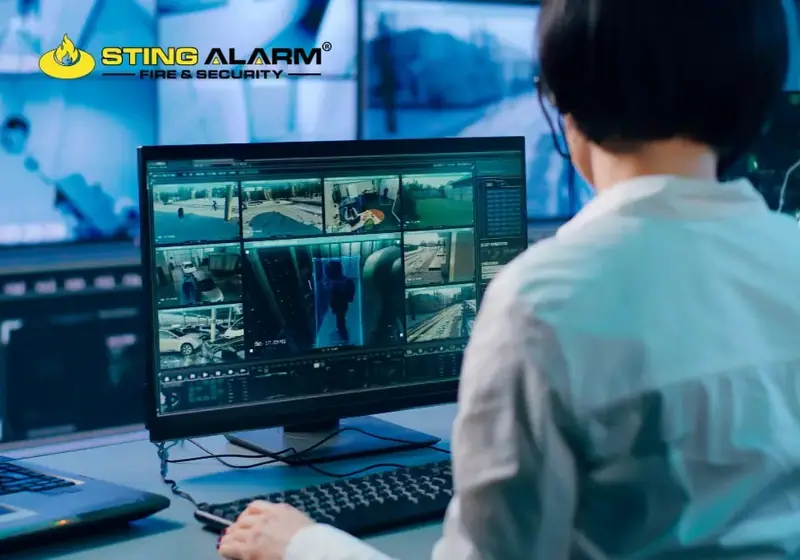
Many businesses have camera systems with outdated equipment, limited coverage, or nobody watching. We evaluate your current setup, identify vulnerabilities, and integrate compatible cameras, including analog, legacy, and partial-coverage systems, into remote guarding without interrupting operations. If you need more coverage, see video surveillance. For large outdoor sites, an autonomous security drone can add aerial coverage watched by the same operators.
Remote guarding in Phoenix
Remote guarding is also available for businesses in the Phoenix metro. See remote guarding in Phoenix for details.
Sites with gates or large lots often add license plate recognition so operators can identify vehicles involved in an incident.
One vendor for security and fire
Remote guarding is part of an integrated business security system with intrusion detection, cameras, and access control, and your intrusion and fire alarm signals are watched 24/7 by our UL-listed monitoring center. Sting Alarm is also a licensed fire protection contractor, so fire protection can be handled by the same team. One vendor, one point of contact.
Why Sting Alarm
- Local and independently owned since 2003
- Over 1,000 five-star Google reviews
- Licensed in Nevada (C2D-0061014) and Arizona (ROC CR-16 #359059)
- Our own local team for design, installation, and service
Every night your property is unwatched is a night something can go wrong. Call (702) 737-8464 in Las Vegas or (602) 431-1300 in Phoenix or request a free site assessment.
In Arizona? See Remote Guarding in Phoenix, AZ.
See Remote Guarding in action
Real incidents recorded by Sting Alarm cameras and handled live by our Remote Guarding operators.
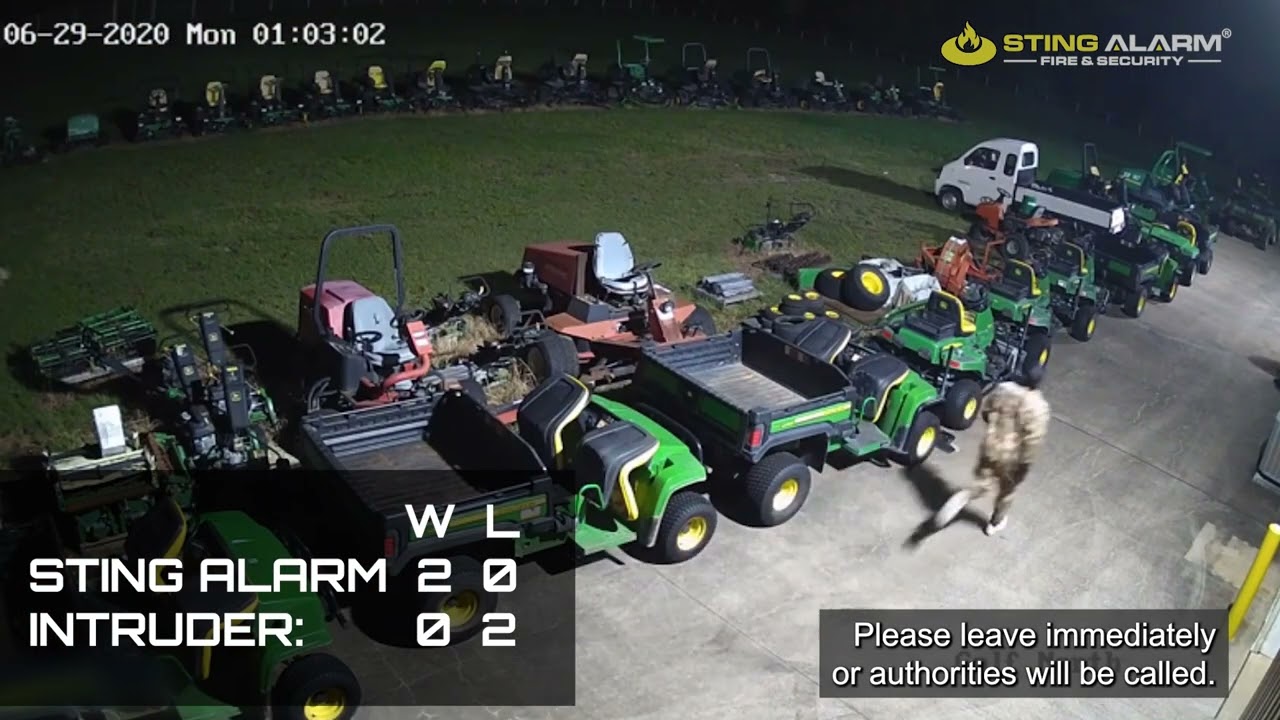
Real footage of Sting Alarm Remote Guarding: cameras with analytics flag a person on the property, a live operator talks them down over the speaker, and the incident is recorded for the customer.

Security camera footage of a fuel theft attempt at a business yard. The Remote Guarding operator sees the activity live, issues a voice warning through the on-site speaker, and the intruder leaves.

A construction site after hours: Remote Guarding cameras detect a person approaching equipment, the operator intervenes with a live voice-down, and the attempt ends before anything is taken.

Swimmers still in a community pool after closing. The Remote Guarding operator announces closing time over the speaker and watches until the area is clear, reducing the liability risk for the property.
Request a free remote guarding site assessment
We evaluate your property, your existing cameras, and your coverage gaps, then build a remote guarding plan around your operation.
What happens next
4.9 stars from 1,161 Google reviewsRecent Google reviews
4.9 stars from 1,161 Google reviews★★★★★ Isaac and Isaac from Sting were amazing!!! They showed up on time and even got the installation done before the quoted time. Isaac explained how the system worked in detailed and set up my cameras and doorbell without any issues. I would recommend Sting to anyone looking to upgrade their security system and ask for Isaac.
★★★★★ Sting Alarm has been great to work with. Had an issue that needed a field tech to come out. Mike was dispatched and worked on the issue - quickly identifying the issue and resolving it for me. Friendly and great service!
★★★★★ Isaac installed our new alarm system today. What a great experience. Isaac was here on time, he got to work, knew what he was doing, asked the right questions and completed the install quickly and efficiently. Isaac is a good guy. Sting Alarm should be proud of his efforts. He represents the company well. He was polite, careful and attentive. To top it off, he tutored me and my wife on the… Read on Google
Frequently asked questions
What is remote guarding?
Remote guarding, also called a virtual guard, combines security cameras, video analytics, and live operators who watch your property in real time. When someone is where they should not be, an operator speaks to them through on-site speakers and coordinates law enforcement if needed, instead of reviewing footage after the fact.
How is remote guarding different from video surveillance?
Video surveillance records activity so you can review it later. Remote guarding adds live operators who respond while activity is happening, with audio warnings, event verification, and escalation to law enforcement.
How much does remote guarding cost compared to a security guard?
Remote guarding typically costs 60 to 80% less than a full-time on-site security guard. Your exact cost depends on the number of cameras, the hours covered, and the size of the property, and we provide a quote after a site assessment.
What types of businesses use remote guarding?
Construction sites, car dealerships, warehouses, equipment yards, retail properties, office campuses, multi-family communities, and other properties that sit empty or lightly staffed after hours.
Can remote guarding use my existing cameras?
In many cases, yes. We evaluate your current cameras, coverage, and recording equipment, and integrate compatible systems, including older analog or hybrid setups, before recommending any replacements.
Is remote guarding automated?
No. Video analytics filter out routine motion, but every intervention is made by a trained operator who looks at the live video and makes the judgment call.