The Essential Benefits of Fire Protection Services for Your Business
The real benefits of fire protection services for a business: life safety, protecting property, staying code compliant, less downtime, and insurance.

How often fire alarms should be inspected, what a fire alarm inspection includes, and why regular testing protects lives, property, and code compliance.
Fire alarm inspections make sure your system will actually detect a fire, sound the alarm, and reach the monitoring station when it counts. Commercial fire alarms are inspected and tested under NFPA 72, with the full system checked at least once a year, and home smoke alarms should be tested monthly. Regular inspections catch failing parts early, cut false alarms, and keep you compliant with the fire code.
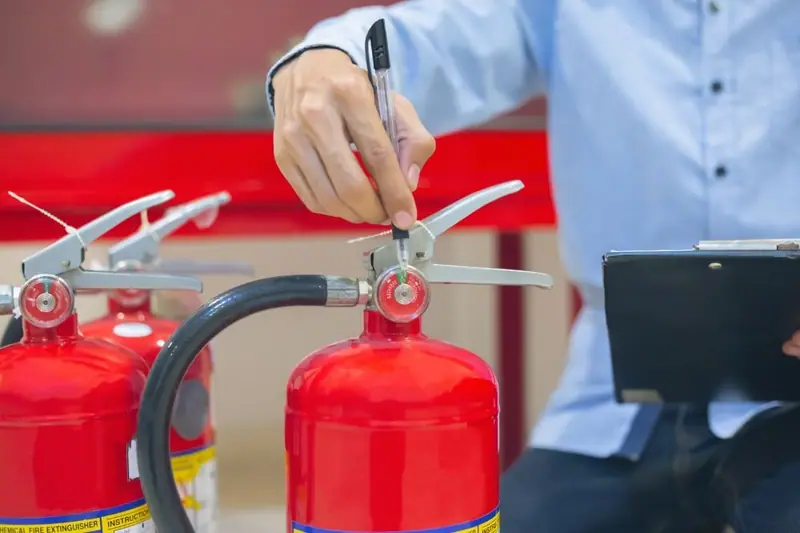
Fire alarms are among the most important safety systems in any building, whether it is an office, a store, a warehouse, or a home. But installing a fire alarm is not enough. It has to be inspected and maintained so it works when it is needed.
Fire alarm systems are networks of detectors, wiring, control panels, and communicators. Over time, dust, electrical issues, and aging parts reduce their reliability. Routine fire alarm inspection and testing finds small problems before they become failures.
Fire codes require fire alarm systems to be inspected, tested, and maintained on a schedule, with records available to the fire inspector. Falling behind can mean fines, other enforcement, and trouble with insurance.
False alarms are more than a nuisance. They pull firefighters away from real emergencies, can bring fines, and teach occupants to ignore the alarm. In the City of Las Vegas, two confirmed false or nuisance fire alarms within 30 days bring a fire hazard warning notice, and more over the next 30 days can bring fines. Maintenance finds the faulty detectors and wiring behind many of them.
Power surges, dead batteries, and communication failures can keep an alarm from working at the worst moment. An inspection verifies every part, including backup batteries and the signal to the monitoring center.
A working fire alarm gives people time to get out and gets the fire department moving sooner, which limits damage.
A full inspection covers every part of the system:
Choose a company licensed for fire alarm work in your state and familiar with the systems in your building.
You should receive a clear report of what was tested, what failed, what was repaired, and your compliance status, in the format your fire authority requires.
Fire protection is ongoing. Working with a company that also provides fire alarm monitoring and repairs means one call when something needs attention.
A maintenance plan keeps inspections on schedule and reduces surprise failures.
Sting Alarm is a licensed fire protection contractor in Nevada (State Fire Marshal E292, F602, G1209) and Arizona (ROC CR-16 #359059). We offer:
See all of our fire protection services, or call (702) 737-8464 in Las Vegas or (602) 431-1300 in Phoenix to schedule an inspection.
Commercial fire alarm systems are inspected and tested under NFPA 72, with the full system checked at least once a year and some components on more frequent schedules. In the City of Las Vegas, an annual fire alarm report is among the required records. At home, the U.S. Fire Administration recommends testing smoke alarms monthly.
A fire protection company licensed for that work in your state. In Nevada, that means a company licensed through the Nevada State Fire Marshal; in Arizona, a contractor licensed by the Registrar of Contractors for fire protection systems.
The inspector documents the deficiencies, and they need to be repaired and the system retested. Uncorrected problems can lead to fines or other enforcement from the fire authority, and a system that does not work puts people at risk.
The City of Las Vegas fire code amendments require inspection, testing, and maintenance records to be kept for at least 3 years. Check with your local fire authority for the rule where your building is.
The U.S. Fire Administration recommends replacing the entire smoke alarm every 10 years and replacing batteries at least once a year.
The real benefits of fire protection services for a business: life safety, protecting property, staying code compliant, less downtime, and insurance.
What security a medical office needs: access control, video, after-hours protection, fewer false alarms, and monitored fire alarms, from one local team.
What commercial fire inspection and maintenance cover in Las Vegas and Phoenix: fire alarms, sprinklers, extinguishers, suppression, exit lighting, and records.
Tell us a little about your home or business and a local security expert will reach out.
★★★★★ Sting Alarm has been great to work with. Had an issue that needed a field tech to come out. Mike was dispatched and worked on the issue - quickly identifying the issue and resolving it for me. Friendly and great service!
★★★★★ From the beginning, Sting Alarm has been so easy to work with. From Jeff in Sales, to scheduling, and finally when our tech came out in a Saturday for the installation, everything was seamless. Our tech Isaac was fantastic. He was neat and cleaned up after the installation, and took time with me and my husband to get us set up on the app. He was patient, walking us through all the features.… Read on Google
★★★★★ Mike in service is an amazing tech. This morning he came out to replace our faulty smoke detector. He was professional, efficient, really friendly and took the time to explain everything clearly. The whole process was quick and stress-free—highly recommend Mike and Sting Alarm