
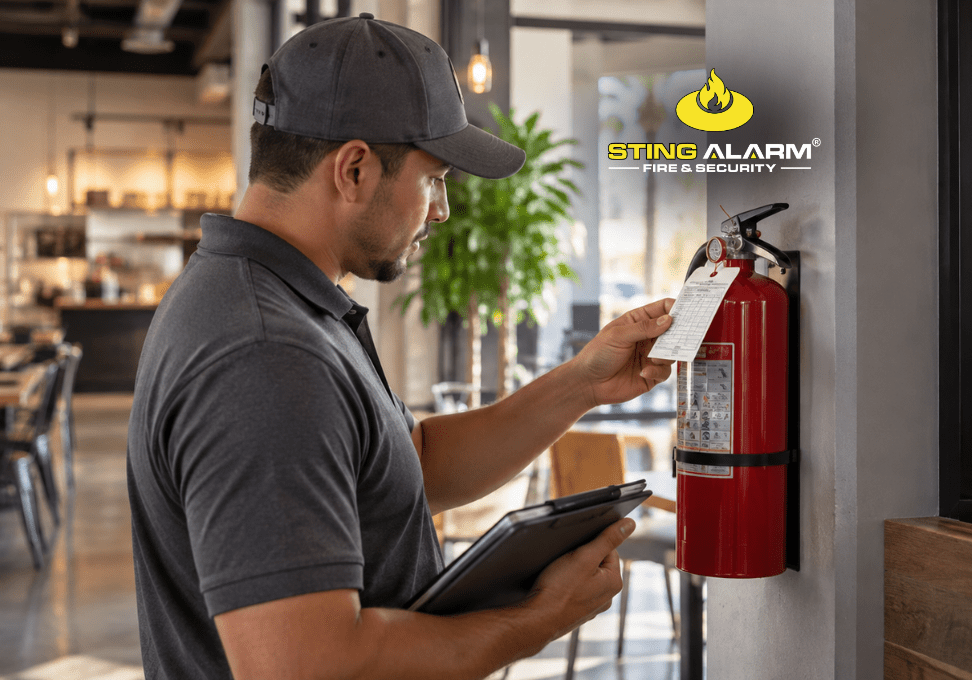

When you own or manage a commercial property in Las Vegas or Phoenix, fire inspection and maintenance are more than annual paperwork. They help confirm that fire alarms, sprinklers, portable extinguishers, suppression systems, emergency lighting, and exit signs are being inspected and serviced according to the requirements that apply to the property.
Some problems produce a trouble signal at the fire alarm panel. Others may be found only through a visual inspection or scheduled test. A blocked sprinkler, damaged extinguisher, past-due service, loose connection, or failed backup battery may not be obvious during normal operations.
Important: Inspection and testing intervals are not the same for every system or device. The adopted code, equipment type, manufacturer instructions, occupancy, and local Authority Having Jurisdiction determine what applies. A schedule used for one property or city may not apply to another.
Regular inspection and maintenance can help identify deficiencies, document completed work, and keep required service dates organized. Sting Alarm provides commercial fire inspection and maintenance services in Las Vegas and commercial fire alarm inspection and related services in Phoenix. Here is a plain-language overview of what those services may cover.
Local Requirements Are Not Interchangeable
Las Vegas and Southern Nevada
Nevada regulations adopt specific editions of national fire protection standards and require qualified or licensed personnel for regulated work. The local fire authority may also have requirements that apply to a particular property, system, or occupancy. Businesses should confirm the adopted code and required schedule with the Authority Having Jurisdiction.
City of Phoenix
Within Phoenix city limits, the 2024 Phoenix Fire Code requires fire protection and life safety systems to remain in operative condition. Inspection and testing must be performed by a contractor licensed by the State of Arizona who is currently qualified by the Phoenix Fire Department for the particular system. The building owner remains responsible for ensuring the required work is completed.
Phoenix also requires inspection reports to be submitted to the fire code official. A conspicuous inspection or testing tag must show the date, contractor, individual who performed the work, and whether deficiencies were found. Other Phoenix metro cities have their own fire authorities and may use different amendments or procedures, so businesses outside Phoenix should confirm local requirements before scheduling service.
Fire Alarm Inspection and Testing
A commercial fire alarm system can include a control panel, initiating devices, notification appliances, power supplies, and one or more communication paths. Depending on the installed system, inspection and testing may include reviewing the panel, operating selected devices, checking audible and visible notification appliances, testing signal transmission, reviewing batteries, and documenting the results.
NFPA 72 does not assign one identical interval to every fire alarm component. Some items are inspected or tested annually, while others may have quarterly, semiannual, or other schedules. Nevada regulations also require fire alarm systems to receive tests and inspections at prescribed intervals under the supervision of qualified persons. The service company and local AHJ should confirm the exact schedule for each property.
Sprinkler System Inspection and Testing
NFPA 25 addresses the inspection, testing, and maintenance of water-based fire protection systems. The required activities and intervals vary by component. Depending on the system, service may include checking sprinkler condition and clearance, visible piping, control valves, gauges, waterflow alarms, drains, and other equipment. Certain flow-related tests may also be required.
Closed valves, physical damage, corrosion, obstructions, and other deficiencies can affect system performance. A qualified provider can document the condition found, identify an impairment or deficiency, and explain the next step. The required correction and reporting process depends on the finding and the AHJ.
Portable Fire Extinguisher Service
Portable extinguishers require more than a current-looking tag. For workplaces covered by OSHA’s portable extinguisher rule, employers must visually inspect extinguishers each month and complete an annual maintenance check. Nevada regulates extinguisher inspection, maintenance, recharging, hydrostatic testing, and service tags under its adopted fire rules.
Internal maintenance and hydrostatic testing are not performed on the same annual schedule for every extinguisher. The interval depends on the extinguisher type, cylinder, condition, and applicable requirements. Some work may be completed at the property, while other work may require the extinguisher to be removed temporarily for off-site service. Sting Alarm offers extinguisher inspection, maintenance, recharging, hydrostatic testing, and tagging for Las Vegas businesses. Phoenix-area service availability should be confirmed for the property before scheduling.
Fire Panels and Suppression Systems
Commercial kitchens and special-hazard areas may use suppression systems in addition to, or separate from, the building sprinkler system. Inspection and maintenance requirements depend on the listed system, manufacturer instructions, the applicable standard, and the AHJ. Sting Alarm’s Las Vegas service offering includes fire panels, kitchen hood suppression systems, and special-hazard systems. Its Phoenix service page also lists kitchen hood and special-hazard system support. Service availability depends on the property, equipment, jurisdiction, and contractor qualifications.
Changes to cooking appliances, hoods, hazards, room layout, or building use can affect whether the existing protection remains appropriate. Tell the service provider about renovations or equipment changes so the system can be reviewed against the current conditions.
Emergency Lighting and Exit Signs
Emergency lighting and exit signs support safe egress when normal power or visibility is limited. Applicable requirements vary by building and occupancy. Functional testing and documentation can help confirm that installed equipment operates as intended and that damaged or failed units are identified for repair.
Preventive Maintenance and Records
Fire protection systems rarely share one universal service date. A preventive maintenance agreement can help organize recurring inspections, maintenance windows, open deficiencies, and service records across multiple systems. It does not replace the property owner’s or operator’s responsibility to understand and meet applicable requirements, and it does not override the AHJ.
The agreement should clearly identify which systems are covered, the scheduled activities, the documentation provided, and how repairs are authorized. If one provider handles several systems, that coordination may simplify scheduling and give the property team a clearer point of contact.
Records matter. Nevada rules require specific service tags for fire alarm systems, portable extinguishers, and fixed extinguishing systems. Test reports, service tags, deficiency notices, repair records, and current contact information should be kept where authorized staff can retrieve them when needed.
What to Confirm Before Your Next Service Visit
- Which systems and devices are included in the service scope.
- Which Authority Having Jurisdiction, code edition, and local requirements apply to the property, especially outside the central city.
- Which inspection, testing, and maintenance intervals apply to each system.
- How deficiencies, impairments, repairs, tags, and final reports will be documented.
Serving Las Vegas and Phoenix Businesses
Sting Alarm has served Las Vegas since 2003 and now provides commercial fire alarm inspection and related services through its Phoenix location. Available services differ by market, property, installed equipment, and applicable contractor qualifications. Our team can confirm the scope before scheduling.
If you need help reviewing upcoming service dates or a current deficiency, contact Sting Alarm for a free quote. Call Las Vegas at (702) 737-8464 or Phoenix at (602) 431-1300.

