Safe Charging Habits for Fire Prevention Week
NFPA safe charging habits for lithium-ion batteries, desert heat tips for Las Vegas and Phoenix, and how smoke and heat detection adds protection.

How to prevent fires at your business: a 5-step risk assessment, extinguishers, exit drills, inspections, high-hazard sites, and heat safety for employees.
To prevent fires at your business, find and remove the hazards that start fires, make sure smoke detection and extinguishers are in place and working, train employees on a clear evacuation plan, and keep every fire protection system inspected and monitored. Most workplace fires start with ordinary things like cooking, electrical equipment, heaters, and trash, so a short assessment and a few habits remove most of the risk. Sting Alarm provides fire protection services for businesses in Las Vegas and Phoenix, and this guide covers what every owner should have in place.
Fires in offices and stores are not rare. According to the U.S. Fire Administration, there were 16,500 office and store fires in the United States in 2020, causing $932 million in direct property damage. Behind those numbers are injured employees, closed doors, lost inventory, and customers who go somewhere else while you rebuild. Prevention costs far less than recovery, and most of it is planning and habit rather than equipment.
A fire risk assessment is a structured walk-through of your building. You can do it yourself or ask a professional to help.
Early detection buys the time people need to get out. Smoke and heat detectors should cover the areas where fires are likely to start and the paths people use to leave. In commercial buildings, detectors usually connect to a fire alarm control panel, which sounds the alarm through the whole building. A system that only makes noise helps the people who hear it. A system with fire alarm monitoring sends the signal to our monitoring center, so the fire department is dispatched even when the building is empty.
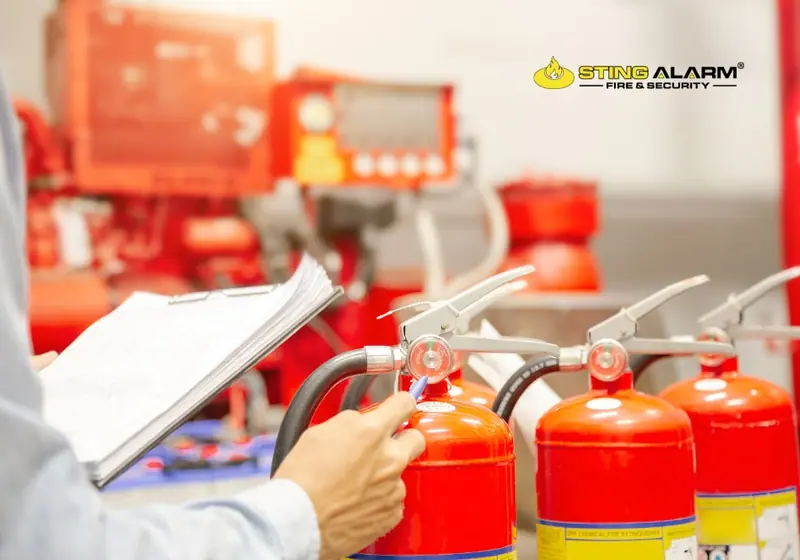
Extinguishers only help if they are accessible, charged, and familiar. A quick test for any office: ask a few employees where the closest extinguisher is and how to use it. If the answers are "not sure" and "pull, then something," that is a training gap.
A posted exit sign does not mean people will use it. In a real emergency, people freeze, follow the crowd, or head for the door they came in through. The workplaces that come through a fire safely practiced beforehand.
A quick gut check: Is your fire alarm monitored, or just loud? When was your last drill or extinguisher training? Would your employees know what to do if the alarm went off right now? If any answer makes you hesitate, start there.
Fire protection equipment wears out, gets blocked, and falls out of step with the building. Your local fire authority sets inspection and testing requirements based on the adopted fire code and how your building is used, so the exact schedule depends on your property. A practical routine looks like this:
Sting Alarm provides fire inspection and maintenance with one local team, including sprinkler flow tests and hydrostatic extinguisher testing done in-house, and keeps the documentation inspectors ask for. For what inspectors look for in Las Vegas, see our guide to fire alarm code compliance.
Some businesses carry more fire risk than a typical office, and they need more than the general steps above.
Behind the copper stills and barrel racks, a distillery stores and processes flammable spirits. A fire can move fast, and one incident can wipe out years of aging inventory. Distilleries also carry high-value product that attracts theft and after-hours intrusion. Many start small and piece together fire, cameras, and intrusion protection from different vendors, each with its own contract, inspection schedule, and records. When an inspector or insurer asks for documentation, those scattered records become a liability.
A one vendor approach puts life safety fire protection, intrusion detection, and video on one schedule with one set of records. Fire alarm signals reach the monitoring center quickly, systems are designed to stay online when other communications fail, and security covers the inventory after hours.
Cooking equipment, grease, and busy staff make restaurant kitchens a common starting point for fires. Keep hoods and ducts clean, keep the kitchen hood suppression system serviced on schedule, keep the right type of extinguisher for cooking oil fires within reach, and never leave cooking unattended.
Stacked inventory, pallets, and higher racking change how a fire spreads and how well sprinklers and detectors can reach it. Keep clearance below sprinkler heads, keep aisles open, and have your fire protection reviewed when racking height or stored materials change.
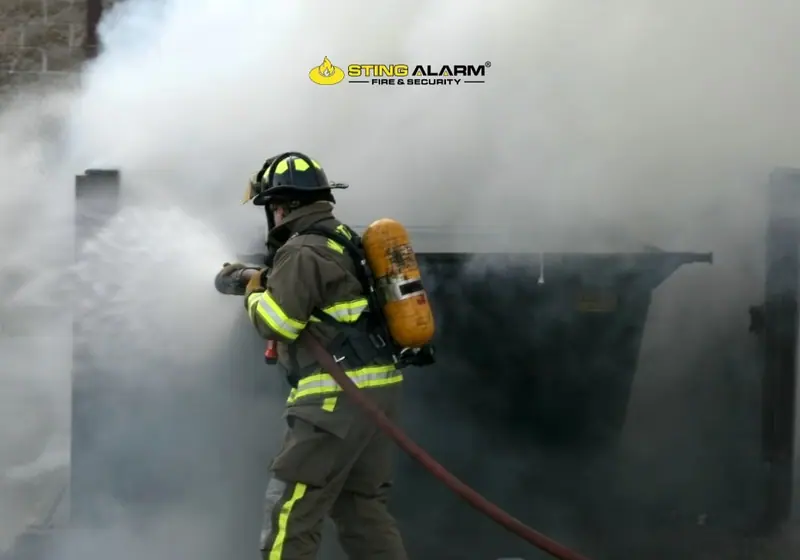
A small fire behind a restaurant turned into an expensive lesson. Surveillance footage later showed a person deliberately throwing fire-starting materials into a dumpster and against the building's receiving door. The fire caused significant damage, and the owner was left with repairs, disruption, and lost business.
Three things would have changed that story:
Fire protection and business security systems work best together. The cameras that deter a break-in can also catch an arsonist before the fire spreads.
Fire prevention is one part of a safe workplace. A few other areas belong in the same plan.
No business is immune to power outages, storms, or accidents. Write a disaster plan that covers backup power for critical systems, off-site data backups, emergency contacts, and how you will keep operating or reopen quickly. Practice it like a fire drill. For a review that covers fire, security, and emergency planning together, see our post on OSHA Safe + Sound Week and the systems that support workplace safety.
Las Vegas and Phoenix summers are a safety issue for anyone working outside. Set clear heat guidelines before the season starts:
The best safety programs make it easy for employees to report a hazard, a blocked exit, or a frayed cord without hesitation, and then fix it fast. Safety is a shared job between employers and employees, and it works best when it is part of daily routine.
Sting Alarm is a local, independently owned company that has protected businesses since 2003. We design, install, monitor, and inspect fire alarm systems, handle sprinkler and extinguisher testing in-house, and provide security and video from the same team. That means one vendor, one schedule, and one set of records. Call (702) 737-8464 in Las Vegas or (602) 431-1300 in Phoenix, or request a free quote.
Start with a fire risk assessment. Walk the building, list what could start a fire (cooking, electrical equipment, heaters, flammable materials, trash), note who would be at risk and how they would get out, then fix the biggest hazards first and write down what you found.
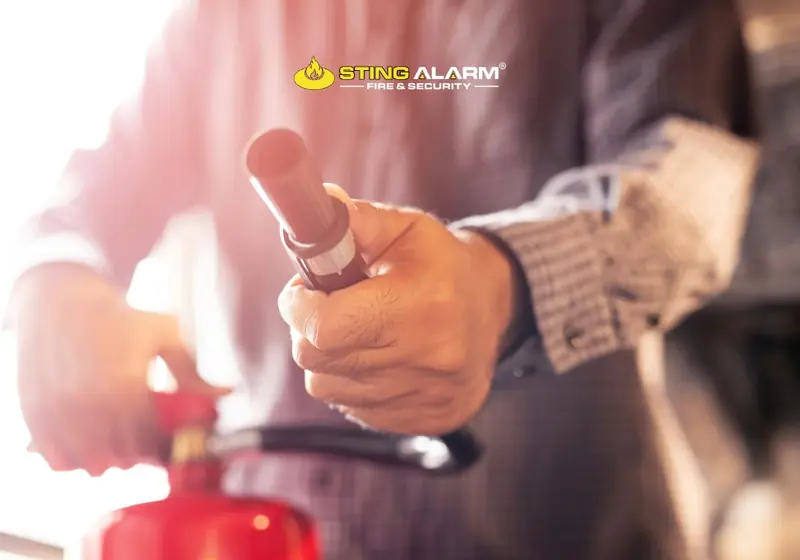
Only employees who have been trained and feel confident should try to fight a small fire, and only if they have a clear exit behind them. Everyone else should know where the extinguishers are, sound the alarm, and leave. The PASS method (Pull, Aim, Squeeze, Sweep) is the standard technique taught in training.
Run drills on a regular schedule and again whenever your staff, layout, or exits change. Some occupancies have drill requirements set by the fire code, so check with your local fire authority for what applies to your building.
Yes. A local alarm only makes noise inside the building. A monitored fire alarm sends the signal to our monitoring center, which dispatches the fire department even when nobody is there to hear it, such as overnight or on a weekend.
Your local fire authority sets inspection and testing requirements for fire alarms, sprinklers, and extinguishers based on the adopted fire code and your building's use. Sting Alarm can inspect, test, and document those systems, including sprinkler flow tests and hydrostatic extinguisher testing done in-house.
NFPA safe charging habits for lithium-ion batteries, desert heat tips for Las Vegas and Phoenix, and how smoke and heat detection adds protection.
What commercial fire inspection and maintenance cover in Las Vegas and Phoenix: fire alarms, sprinklers, extinguishers, suppression, exit lighting, and records.
Use OSHA Safe + Sound Week to review access control, cameras, intrusion detection, fire protection, and records that support workplace safety.
Tell us about your building and a member of our fire protection team will help you find the gaps.
★★★★★ Sting Alarm has been great to work with. Had an issue that needed a field tech to come out. Mike was dispatched and worked on the issue - quickly identifying the issue and resolving it for me. Friendly and great service!
★★★★★ From the beginning, Sting Alarm has been so easy to work with. From Jeff in Sales, to scheduling, and finally when our tech came out in a Saturday for the installation, everything was seamless. Our tech Isaac was fantastic. He was neat and cleaned up after the installation, and took time with me and my husband to get us set up on the app. He was patient, walking us through all the features.… Read on Google
★★★★★ Mike in service is an amazing tech. This morning he came out to replace our faulty smoke detector. He was professional, efficient, really friendly and took the time to explain everything clearly. The whole process was quick and stress-free—highly recommend Mike and Sting Alarm