
Fire prevention can start with a charger. Fire Prevention Week runs October 4 to 10, 2026, and this year’s theme from the National Fire Protection Association (NFPA) is “Charge into Fire Safety™: Safe Charging Is a Superpower!” The message focuses on everyday charging habits that can help reduce the risk of lithium-ion battery fires at home.
Think about how many batteries charge in your home on a typical night. Phones, tablets, laptops, earbuds, smartwatches, power tools, e-bikes, scooters, and even children’s toys may rely on lithium-ion batteries. These batteries store a large amount of energy in a small space, which is why following the manufacturer’s charging instructions matters.
Why Charging Habits Matter
If lithium-ion batteries are damaged or charged incorrectly, they can overheat, start a fire, or explode. As NFPA’s Lorraine Carli explained, “Because lithium-ion batteries are a newer technology, not everyone is aware of the potential dangers they present, particularly when it comes to charging them safely.”
The habits that reduce these risks are straightforward. A quick review can help you identify damaged equipment, an unapproved charger, or a charging location that needs to change.
NFPA Safe Charging Habits
These recommendations align with NFPA’s 2026 Fire Prevention Week guidance:
- Use the right charger. Use the cord and charger that came with the device, or replacements approved by the manufacturer. The wrong charger can damage the battery and increase the risk of fire.
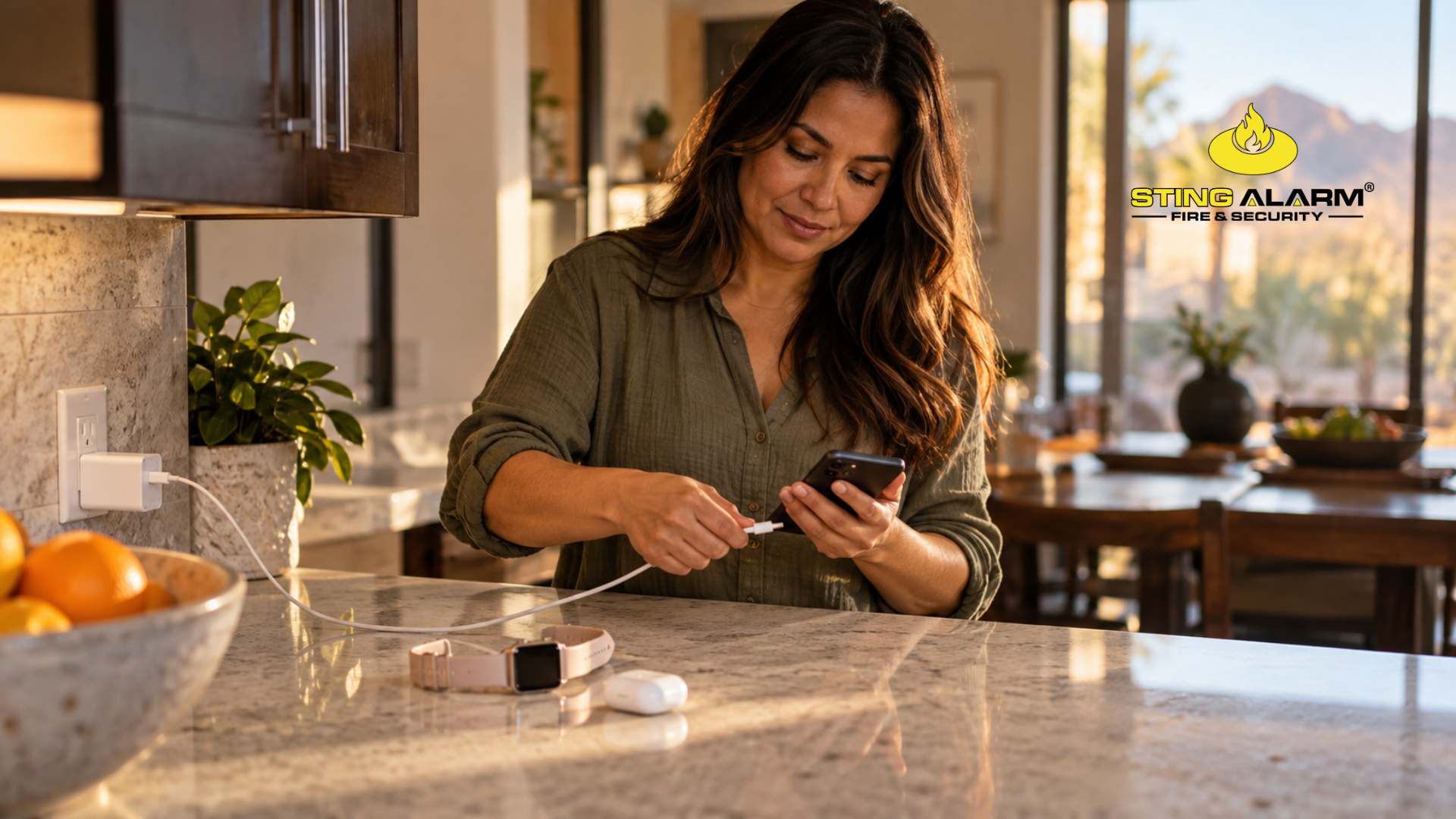
- Charge on a hard, flat surface. Use a table, desk, or similar surface. Do not charge a device under a pillow, on a bed, or on a couch.
- Unplug when it is fully charged. Once the battery reaches a full charge, disconnect the device or remove the battery instead of continuing to charge it.
- Watch for warning signs. Stop using or charging a battery that becomes unusually hot, swells, leaks, develops an unusual odor, changes shape or color, or makes odd noises. If a battery smokes or catches fire, leave the area and call 911.
A Desert Specific Reminder
High outdoor temperatures make battery-temperature guidance especially relevant in Las Vegas and Phoenix. Do not leave a device charging in direct sunlight or inside a hot vehicle. The U.S. Fire Administration advises storing lithium-ion batteries at room temperature when possible and not charging them below 32°F or above 105°F. Always follow the temperature limits and charging instructions provided by the manufacturer.
E-bikes and e-scooters need additional care. NFPA identifies outdoors, away from structures or enclosures and out of direct sunlight, as the safest charging location when possible. In desert conditions, charge only when the manufacturer’s temperature limits can be met, and never place a charging device where it blocks an exit.
A Quick Charging Check for Your Home
Take five minutes this week to review the places where devices charge:
- Confirm that each device uses the charger supplied with it or a replacement approved by the manufacturer.
- Move phones, tablets, laptops, and similar devices off beds, couches, and cluttered surfaces onto a hard, flat surface.
- Check batteries, cords, and plugs for swelling, fraying, cracks, loose connections, or other damage.
- Keep charging equipment away from exits and combustible materials. Give e-bikes and e-scooters the additional space and temperature care described above.
- Remind everyone in the household to disconnect devices when charging is complete.
Smart Detection Adds Another Layer
Good charging habits help reduce risk. Working detection adds another layer of awareness. The PowerG Wireless Smoke and Heat Detector provides early warning with audio and visual alerts when smoke or high temperature is detected. It can also report device tampering and low battery conditions, helping identify when the detector needs attention. Sting Alarm’s product information lists a three-year battery life with typical use and wall or ceiling installation with a bracket.
Detector placement should follow the manufacturer’s instructions, applicable requirements, and the home’s overall detection plan. It should not be selected only because a charger is nearby. In general, the U.S. Fire Administration recommends smoke alarms inside every bedroom, outside each separate sleeping area, and on every level of the home.
Depending on the equipment, service package, and notification settings, compatible alarm events can be sent through the Alarm.com app. When you choose 24/7 Alarm Monitoring, compatible smoke and heat alarm signals can also be sent to a monitoring service, which can coordinate with emergency responders as needed.
Small Habits Real Protection
The right charger, a hard surface, disconnecting a fully charged device, and watching for warning signs can help reduce charging risks. Connected smoke and heat detection can add awareness, but it does not replace safe charging, working smoke alarms, or a practiced home fire escape plan.
Which charging habit could use a quick review in your home?
Talk With Sting Alarm About Smoke and Heat Detection
If you would like to discuss compatible smart smoke and heat detection for your home, the Sting Alarm team can help. Sting Alarm has served Las Vegas since 2003 and now serves homeowners in Phoenix. Request a free quote, call Las Vegas at 702-737-8464, or call Phoenix at 602-431-1300.