
Proactive Video Deterrence: Stop Threats Before They Happen
Proactive video deterrence uses lights, sirens, AI talk-down, and remote video monitoring to stop trespassers before a break-in. How it works for businesses.
Proactive video deterrence stops threats before they happen by having your cameras react the moment they detect a trespasser: flashing lights, a siren, or a spoken warning that tells the person they are being watched. Instead of recording a break-in for later, the system works to prevent it. Sting Alarm installs video deterrence for businesses in Las Vegas and Phoenix as part of our video surveillance systems.
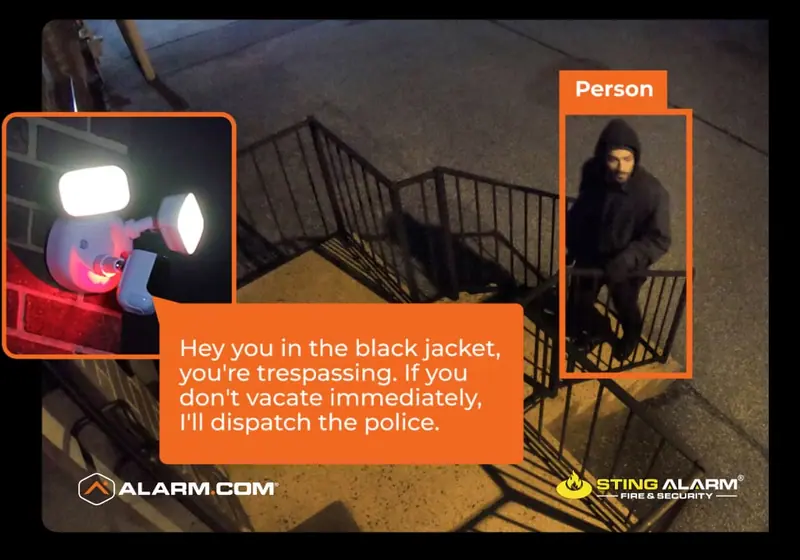
Reactive security tells you what went wrong. Proactive deterrence tries to make sure nothing goes wrong in the first place.
The outdoor floodlight camera
A floodlight camera combines bright lighting, video analytics, and two-way audio in one device. When it detects a person in an area you define, it can:
- Flash red and blue warning lights
- Sound a loud siren
- Let you, or our monitoring center, speak to the person through the camera
Lighting up a trespasser and calling them out is often enough to send them on their way.
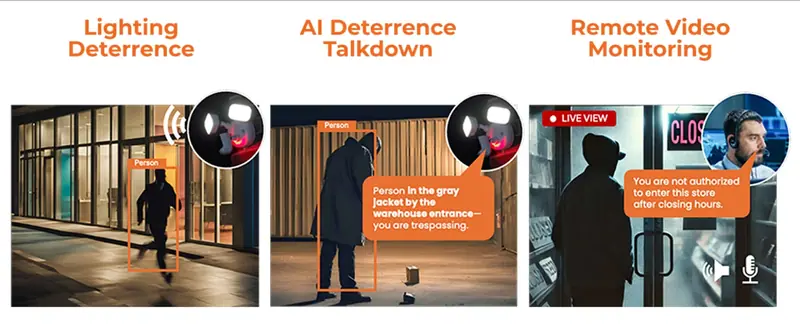
AI deterrence: warnings that sound like a live person
AI deterrence goes a step further. It uses video analytics to recognize a person and plays a spoken warning that can mention details like where they are standing or what color clothing they are wearing. That makes it clear the property is being watched.
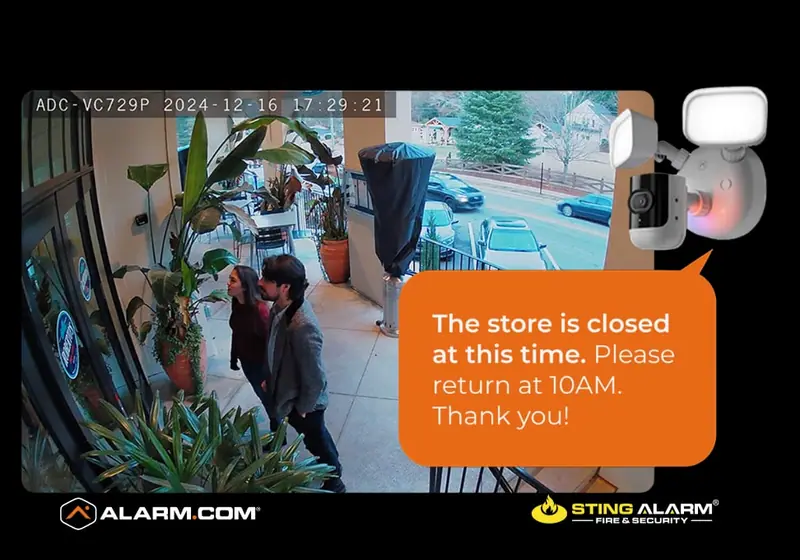
Response modes can be customized for different situations, for example:
- Reminding visitors of your business hours
- Announcing that the property is professionally monitored
- Giving access instructions to delivery drivers or vendors
Remote video monitoring: a fast response when it matters
With remote video monitoring, cameras send video events to our monitoring center, where operators assess what is happening and request police dispatch when needed. Seeing the video means operators can report a crime in progress, not just a tripped sensor. Learn more about video verification.
From the Alarm.com app, you can:
- Arm and disarm cameras and check their status
- Review video alerts and confirm a real threat or cancel a false alarm
- Use an exit delay for video rules so cameras do not alert while you are leaving
Fewer false alarms
Older motion detection mistakes bugs, spider webs, and shadows for people. Improved object analytics filter out those non-threats, so alerts and monitoring center attention go to real activity.
When you need a live operator
If your property needs someone watching in real time, remote guarding adds trained operators who watch your cameras live, speak to trespassers through on-site speakers, and coordinate law enforcement while an incident unfolds.
Upgrade your security with Sting Alarm
Sting Alarm is a locally and independently owned security company protecting Las Vegas businesses since 2003, and now Phoenix. Call (702) 737-8464 or request a quote below.
Ask about video deterrence
Tell us a little about your home or business and a local security expert will reach out.
What happens next
Over 1,000 five-star Google reviewsFrequently asked questions
What is proactive video deterrence?
It is a camera system that reacts the moment it detects a person where they should not be, with flashing lights, a siren, or a spoken warning, instead of only recording. The goal is to make the trespasser leave before anything is damaged or stolen.
What is AI deterrence or AI talk-down?
AI deterrence uses video analytics to recognize a person and plays a spoken warning that can describe them, such as their location or clothing color, so it sounds like someone is watching.
How is video deterrence different from remote guarding?
Video deterrence is automated: lights, sirens, and AI warnings triggered by analytics. Remote guarding adds trained operators who watch live video, speak to trespassers, and coordinate law enforcement.
Will deterrence cameras cause false alarms?
Video analytics are designed to react to people and vehicles, not bugs, shadows, or blowing debris, and video gives operators a way to confirm what happened before requesting dispatch.