
Construction Site Security: Stopping Equipment Theft With Remote Guarding
How to secure a construction site and stop equipment theft: portable cameras, remote guarding, a cost-benefit view, large-project tips, and a site checklist.
To secure a construction site and stop equipment theft, control access to the site, make machines hard to move, cover gates and staging areas with cameras, and add remote guarding so a live operator can intervene after hours instead of finding the loss in the morning. Job sites are exposed because valuable equipment sits in the open on a large, changing footprint with nobody around at night. Sting Alarm provides portable camera systems and remote guarding for construction projects in Las Vegas and Phoenix.
Why job sites get hit after hours
Construction sites are busy during the day and empty at night, and that is when most problems happen. Several things make them easy targets:
- Valuable equipment in the open. Machines, tools, copper, and materials are spread across a large area and left unattended after crews leave.
- A site that keeps changing. Access points move, crews stage equipment in new places, and temporary fencing and work zones shift as the build progresses. Coverage that matched the site in month one may not match it in month six.
- Irregular schedules. Nights, weekends, holidays, deliveries, subcontractor access, and shutdowns create different patterns of legitimate activity, which makes it harder to spot the activity that is not.
- Long recovery. When a machine disappears, the cost goes beyond the machine: replacement rentals, schedule changes, insurance claims, and management time.
Portable cameras and remote guarding
Portable cameras that move with the build
For active sites, Sting Alarm offers portable, rapidly deployable camera systems. Cameras go where the risk is: gates, fence lines, laydown yards, and wherever high-value equipment is parked. As the site changes, the cameras can be repositioned, and the views are checked to make sure they work after dark as well as during the day.
Remote guarding adds a live operator
Recorded video helps document a theft after it happens. Remote guarding gives you a chance to stop it.
- Analytics flag activity in a protected area after hours, such as a person or vehicle inside the fence.
- A trained operator reviews the live video and decides what is happening.
- A live audio warning goes out through on-site speakers, so the intruder knows someone is watching right now.
- The escalation plan kicks in if they do not leave: the operator contacts your designated people and coordinates with law enforcement, with a description of what they see on live video.
- Everything is documented with time-stamped video for police reports and insurance claims.
Analytics filter out routine motion like blowing debris or animals, so operators focus on real activity and you are not flooded with false alerts. Remote guarding does not guarantee every incident will be prevented, and local agency policy determines how police respond, but a live operator with a voice on site changes the outcome far more often than a camera alone.
Cost-benefit: losses, delays, and guard costs
Construction security is easiest to justify when you compare it with what the site stands to lose, not with a generic percentage.
What a theft really costs
- The equipment or materials themselves, plus any deductible.
- Replacement rentals while you wait on an insurance claim or a replacement.
- Schedule delays for every trade that depends on that machine or material.
- Management time spent on police reports, claims, and reorganizing the job.
- Insurance consequences of repeated claims.
What guard coverage costs
A night guard can only be in one place at a time, and covering a large site around the clock takes several people across shifts, plus overtime, holidays, and supervision. Remote guarding typically costs 60 to 80% less than a full-time on-site security guard, and it watches every covered camera at once.
Building your comparison
The useful comparison is site by site. Site size, camera count, coverage hours, existing equipment, audio hardware, any requirement for an on-site guard, and escalation procedures all affect cost. Put that against the value of equipment on site and the cost of a week's delay, and the decision usually becomes clear. For a broader look at the numbers, read remote guarding vs on-site security guards.
Large-scale projects
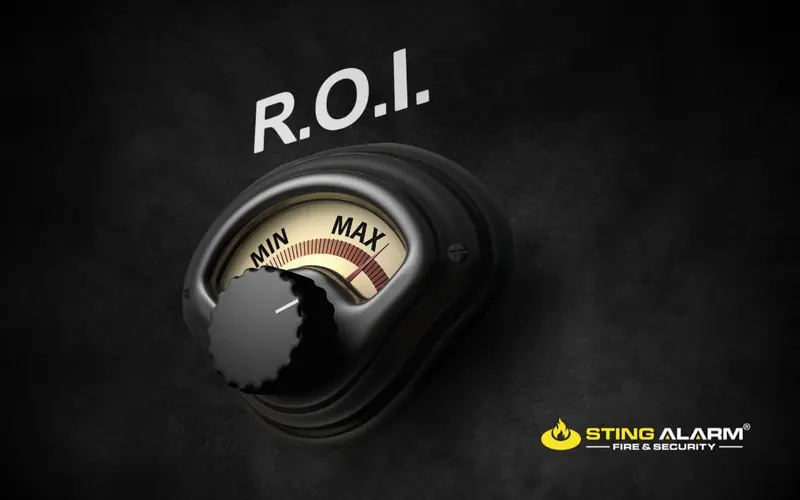
Big projects multiply every challenge. Sites can span many acres, with multiple gates and phases running at once, and the number of people and vehicles coming and going makes tracking access harder.
What works on large projects:
- Virtual perimeters. Analytics define protected zones along fence lines and around staging areas, so an entry after hours triggers an alert to a live operator.
- Two-way audio. Operators can talk to people on site, whether that is warning a trespasser or confirming who a late delivery driver is.
- Scalability. Cameras and guarded zones can be added as new phases open, without hiring more guards for each one.
- Gate and access control. Controlling and logging who comes through the gates, with video tied to each entry, makes it easier to separate legitimate after-hours work from trouble. See our access control options.
- Aerial coverage. On very large footprints, an autonomous security drone can fly to the location of an alarm and stream live video to our remote guarding team, covering areas fixed cameras cannot reach.
- Evidence. When disputes, incidents, or claims come up, video from the system speeds up investigations.
A captured incident
In one incident, our team watching live video saw a person loitering in a stairwell after hours. The operator spoke to the individual through the on-site speaker and told them to leave the premises. They left right away, with no damage and no police call needed. That is what remote guarding looks like most nights: a short, quiet intervention before anything happens.
Site security checklist
Use this as a starting point, and review it whenever the layout changes significantly.
- Walk the site. Identify vulnerable areas, blind spots, gates, fence lines, and where high-value equipment is parked.
- Secure the perimeter. Keep fencing intact, lock gates, and limit the number of entry points after hours.
- Light it. Light gates, staging areas, and equipment yards so cameras get usable night video.
- Make machines hard to move. Remove keys from unattended equipment and use locks, immobilizers, or other theft controls where appropriate.
- Keep records. Maintain current PIN or serial numbers and recent photos for each machine so the information is ready if a theft must be reported.
- Place cameras where the risk is. Cover gates, laydown areas, and equipment staging, and check that each view is useful day and night. See how we plan video surveillance coverage.
- Connect alarms and video. Tie sensors and gate events to the cameras so any breach triggers recording and an alert.
- Define the escalation plan. Decide who gets notified, when live audio is used, and when law enforcement is called.
- Brief your crews. Make sure supervisors and subcontractors know the system is there, what the after-hours rules are, and who to call.
- Re-check after every major change. Move cameras and update the plan as the build progresses.
For more on how coverage and response come together on a job site, read how remote guarding protects construction sites.
Get a site assessment
Sting Alarm has protected Las Vegas businesses since 2003 and serves Phoenix-area projects with the same team approach, including remote guarding in Phoenix. We build coverage around how your site actually operates and update it as the project moves. Call (702) 737-8464 in Las Vegas or (602) 431-1300 in Phoenix, or request a free quote.
Equipment theft stopped on camera
Real incidents recorded by Sting Alarm cameras and handled live by our Remote Guarding operators.

A construction site after hours: Remote Guarding cameras detect a person approaching equipment, the operator intervenes with a live voice-down, and the attempt ends before anything is taken.

Security camera footage of a fuel theft attempt at a business yard. The Remote Guarding operator sees the activity live, issues a voice warning through the on-site speaker, and the intruder leaves.
Request a construction site security assessment
Tell us about your project, its schedule, and where equipment is staged, and we will design coverage around how the site actually runs.
What happens next
4.9 stars from 1,164 Google reviewsRecent Google reviews
4.9 stars from 1,164 Google reviews★★★★★ Isaac and Isaac from Sting were amazing!!! They showed up on time and even got the installation done before the quoted time. Isaac explained how the system worked in detailed and set up my cameras and doorbell without any issues. I would recommend Sting to anyone looking to upgrade their security system and ask for Isaac.
★★★★★ Sting Alarm has been great to work with. Had an issue that needed a field tech to come out. Mike was dispatched and worked on the issue - quickly identifying the issue and resolving it for me. Friendly and great service!
★★★★★ Isaac installed our new alarm system today. What a great experience. Isaac was here on time, he got to work, knew what he was doing, asked the right questions and completed the install quickly and efficiently. Isaac is a good guy. Sting Alarm should be proud of his efforts. He represents the company well. He was polite, careful and attentive. To top it off, he tutored me and my wife on the… Read on Google
Frequently asked questions
How do you stop equipment theft on a construction site?
Combine physical controls with live oversight. Secure gates and fence lines, remove keys and immobilize machines, keep serial-number records and photos, light and cover staging areas with cameras, and add remote guarding so a live operator can warn intruders and contact law enforcement while it is happening.
What is the best security camera setup for a construction site?
Portable, rapidly deployable cameras placed at gates, laydown yards, and wherever high-value equipment is parked, with views that work at night as well as during the day. Because the site changes as the build progresses, coverage should be moved and re-checked whenever access points or staging areas move.
Is remote guarding cheaper than a night guard for a job site?
Remote guarding typically costs 60 to 80% less than a full-time on-site security guard. For a specific project, compare the cost of the security plan with the site's actual exposure to equipment loss, replacement rentals, delays, and management time.
What happens when remote guarding detects someone on the site?
Analytics flag a person or vehicle in a protected area after hours, a trained operator reviews the live video, warns the person through on-site speakers, and follows the site's escalation plan, which can include calling designated contacts and law enforcement. Every event is documented with video.
Can site security move as the project changes?
Yes. Portable cameras can be repositioned as gates, work zones, and equipment staging areas change, and the remote guarding response plan can be updated with them.