What an Integrated Security System Actually Looks Like in Daily Operation Across a Commercial Property

It Doesn’t Start with an Alert, It Starts with Normal Activity
Most systems aren’t tested during a crisis, they’re used during routine activity as employees arrive, vendors come through, and the building moves through its normal schedule. Doors unlock, access events are logged, and cameras capture movement without anyone needing to think about it.
When a system is set up properly, that activity is connected rather than split across different platforms. At Sting Alarm, that’s the baseline, not just installing equipment, but making sure it reflects how the property actually operates throughout the day.
A Typical Day Tells You More Than Any Test Scenario
Early in the day, employees begin arriving and using access credentials at entry points. Those events are logged automatically, and the associated video is already there when it’s needed, without having to search for it later.
As activity picks up, the system continues to follow movement across the property. Deliveries come in, restricted areas are accessed, and internal traffic shifts depending on how the business operates. All of it is recorded, but more importantly, it’s connected in a way that allows it to be reviewed without piecing things together after the fact.
If something doesn’t line up, whether it’s access at an unusual time or movement in a restricted area, it stands out within that flow instead of getting buried in a list of unrelated events.
Where Integration Starts to Matter
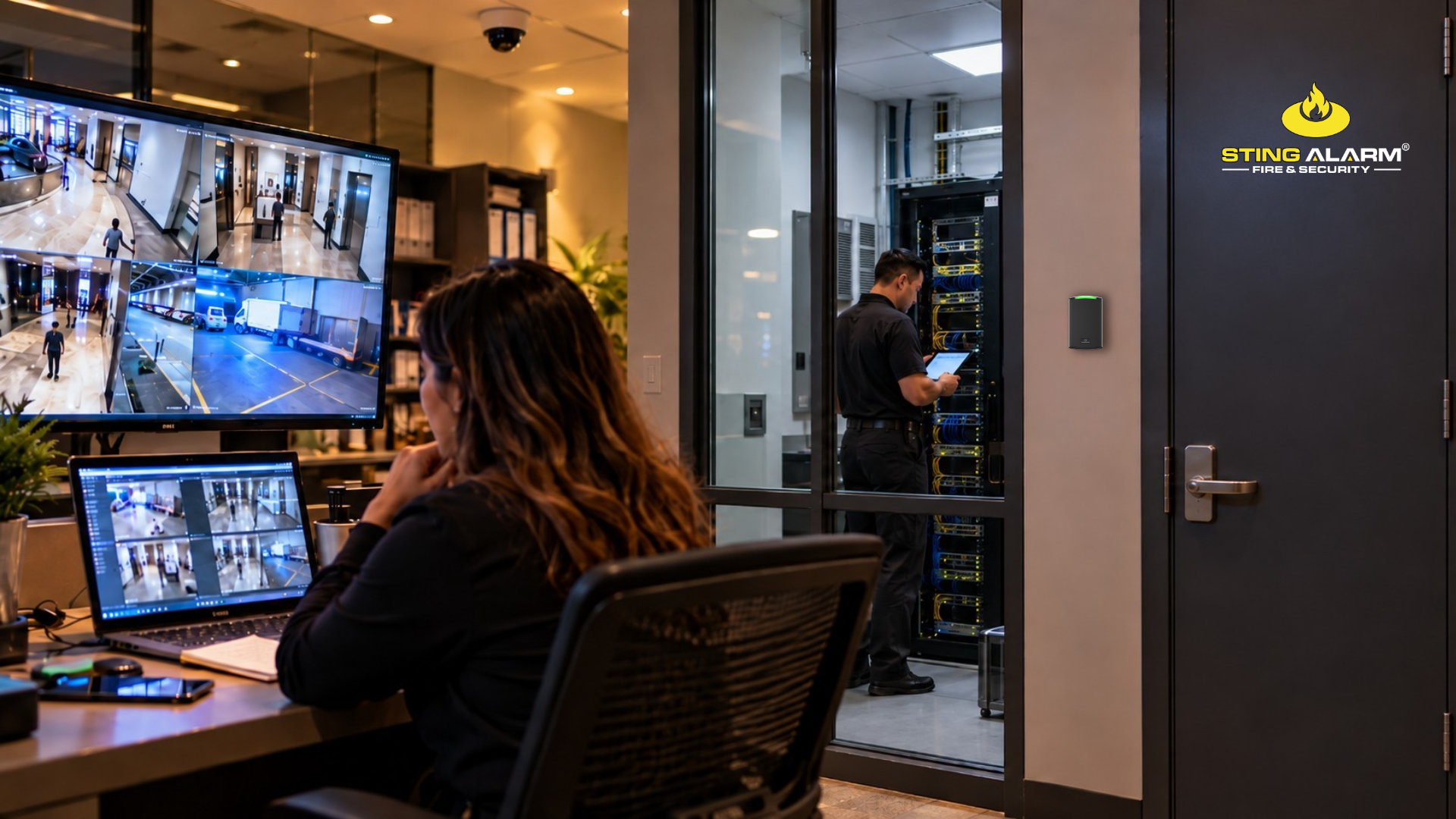
Without integration, each of these events sits in its own system. Access control logs one set of information, video captures another, and alarms operate independently, which turns even simple reviews into a process of pulling data from multiple places.
With everything connected, that process becomes straightforward. An access event, the corresponding video, and any related alerts are already tied together, which makes it possible to understand what happened without reconstructing it step by step.
After Hours Is Where Gaps Become More Noticeable
As the building clears out, activity slows, and anything that does occur becomes easier to identify. Access outside normal hours or movement in restricted areas stands out immediately, and those events are treated differently than they would be during the day.
This is where integration becomes more important. Video, access, and monitoring work together to determine whether activity is expected or needs attention, rather than treating every signal the same way.
If your systems operate independently and reviewing activity takes time or guesswork, it may be worth looking at how everything is connected. The team at Sting Alarm can walk through your setup and show how an integrated system can simplify day-to-day use. Call (702) 737-8464 or connect here: https://stingalarm.com/
What This Means for Day-to-Day Management
For most businesses, the benefit shows up in how the system is used rather than how it looks on paper. Instead of switching between platforms, searching for footage, or matching events manually, everything is available in one place and can be reviewed as a single timeline.
That consistency becomes more valuable over time, especially for properties with multiple access points, varying schedules, or more than one location to manage.
How Sting Alarm Builds Integrated Systems
At Sting Alarm, integration is part of how systems are designed from the beginning. Video surveillance, intrusion detection, access control, and monitoring are configured to operate together so they support the same objective without creating extra layers to manage.
That approach reduces gaps and allows adjustments to be made across the system as the property changes, rather than having to rework each component individually.
An integrated system is defined by how it performs during everyday use. When everything is connected, activity is easier to understand and response becomes more consistent, which allows the system to support the property over time instead of requiring constant workarounds.
If you’re looking to simplify how your security system operates or want to understand how integration would apply to your property, Sting Alarm can help. Call (702) 737-8464 or schedule a consultation here: https://stingalarm.com/