
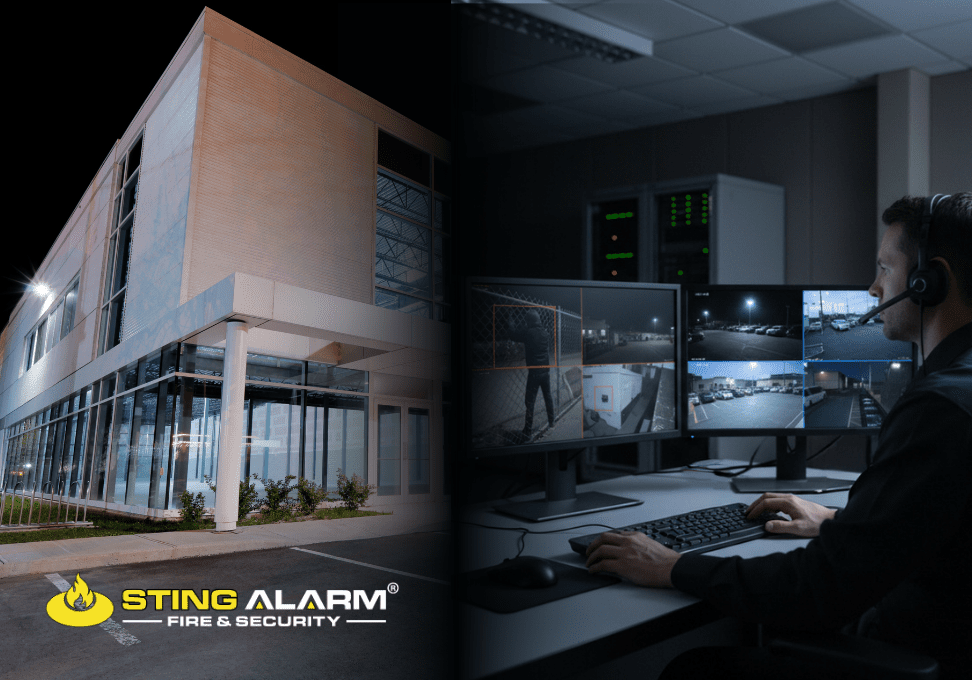
What Actually Happens on Your Property After Hours, and How Remote Guarding Changes the Outcome

Most Security Issues Don’t Happen During Business Hours
For many Las Vegas businesses, security feels handled once the doors are locked and the building is empty. Operations wind down, the last employee leaves, and attention shifts elsewhere. That’s usually when properties become most exposed.
Activity that wouldn’t happen during the day starts to surface, whether it’s unauthorized access, loitering, or damage that goes unnoticed until the next morning. By the time someone reviews footage or responds to an alert, the opportunity to intervene has already passed.
At Sting Alarm, remote guarding is built around that reality. The focus is not just on what your system records, but how it performs when no one is there to watch it.
Why Traditional Coverage Leaves Gaps
Most systems in place today were designed to capture events, not manage them as they unfold. Cameras provide visibility, but they operate passively. Alarm systems generate signals, but those signals often arrive without enough context to act quickly. Even when on-site personnel are present, coverage is limited by time and physical range.
What this creates is a gap between awareness and response. Businesses can often see what happened, but they cannot always influence the outcome while it is still happening.
What Remote Guarding Looks Like in Practice
Remote guarding changes how that gap is handled. Instead of waiting for an incident to finish, the system is configured to identify activity early and allow a response while it is still developing.
A properly designed setup can:
- Detect movement in restricted or after-hours areas
- Identify activity that falls outside normal patterns
- Route alerts to trained monitoring personnel in real time
- Initiate live audio warnings through on-site speakers
- Escalate to law enforcement when needed
With that structure in place, the system becomes part of the response itself rather than a tool used after the fact.
Where Businesses See the Difference
This approach tends to matter most in environments where activity continues beyond normal hours or where large areas are difficult to monitor consistently.
Construction sites, equipment yards, dealerships, and warehouse facilities are common examples. These properties often rely on limited staffing after hours, which makes consistent oversight difficult without the right system in place.
Remote guarding fills that gap by maintaining awareness across the entire property, even when no one is physically present.
How Sting Alarm Builds These Systems
Remote guarding only works when it reflects how a property is actually used. Placement, coverage, and response protocols all need to align with real conditions on site.
At Sting Alarm, these systems are built as part of a larger security strategy. Video, intrusion, access control, and fire protection are designed to work together, not operate separately. This kind of approach simplifies management while reducing the gaps that often appear when systems are installed and maintained independently.
The Difference Between Knowing and Responding
It’s important to note that there is a practical difference between having information and being able to act on it. Today, many businesses already have access to footage that shows when an incident occurred. What they are missing is the ability to respond while the activity is still in progress.
Remote guarding addresses that directly, and instead of reviewing events later, the system supports real-time awareness and allows action to be taken when it still matters.
If your current system provides visibility but not response, it may be worth reviewing how it performs after hours. Speak with the team at Sting Alarm about remote guarding options that fit your property. Call (702) 737-8464 or connect here.
Is It a Replacement or an Upgrade
In most cases, remote guarding can build on what is already in place. Existing camera systems can often be adapted to support a more active monitoring approach, depending on their condition and coverage. When upgrades are needed, they are typically focused on improving performance rather than replacing everything outright. A structured evaluation helps determine how your current system can support a more responsive setup.
If you are evaluating ways to improve after-hours security or want to understand how remote guarding would apply to your property, Sting Alarm can help.
Speak with a specialist at (702) 737-8464 or schedule a consultation here.
