
Video Surveillance Can Clarify What Happened
A customer reports a fall near an entrance. A delivery driver says an injury occurred in a loading area. An employee reports an incident in a parking lot.
When those situations become liability claims, the details matter. What happened first? Where was the person standing? What were the visible conditions at the time? Who else was present?
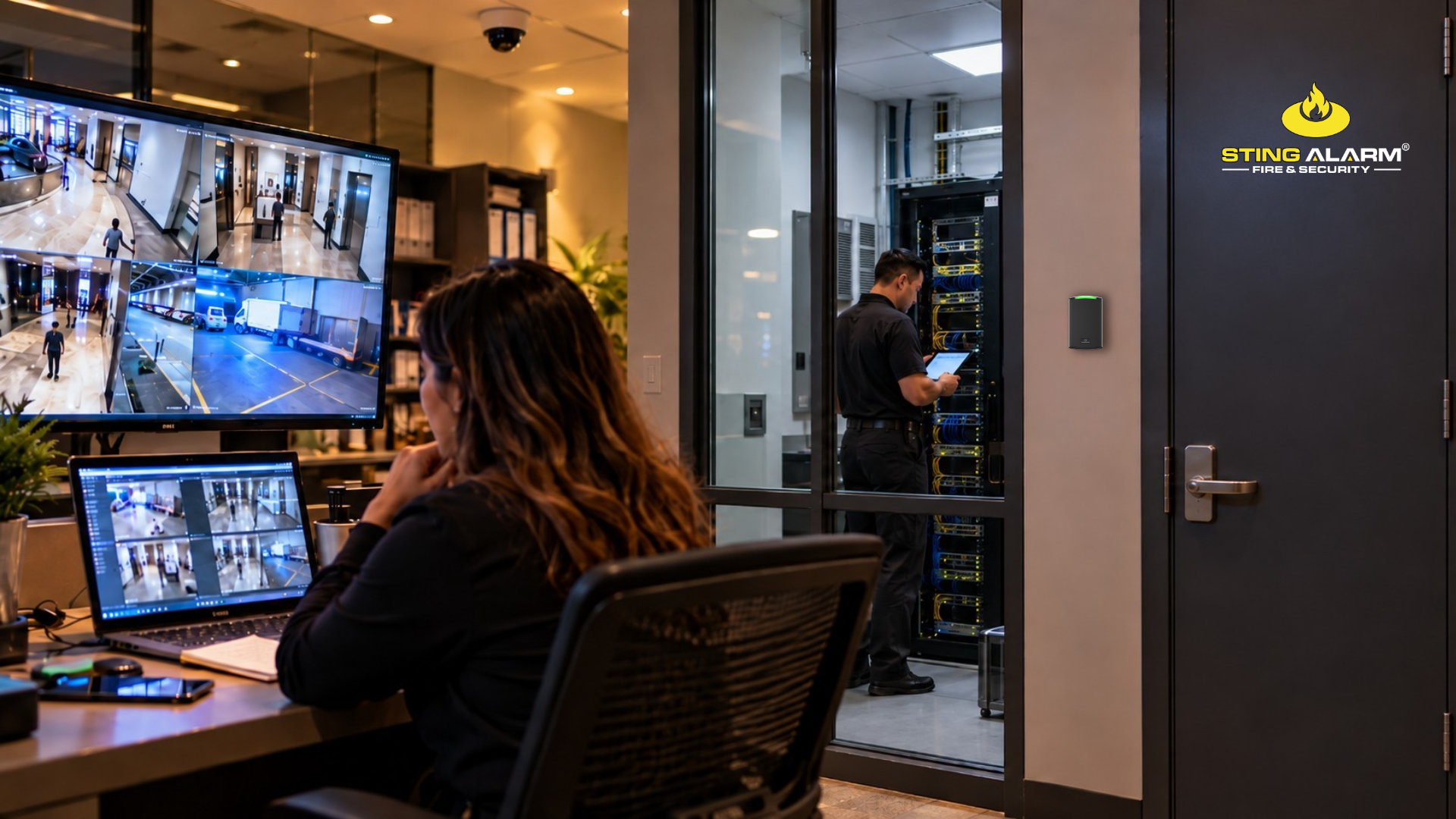
Commercial video surveillance can help answer some of those questions by creating a recorded timeline of activity. It does not automatically prove or disprove a claim, but properly positioned and functioning cameras can give business owners, insurers, and legal teams information that may be difficult to reconstruct later.
For Las Vegas and Phoenix businesses, that makes video more than a security tool. It can also become part of the company’s incident documentation process.
Liability Claims Are Becoming More Severe
The financial importance of good documentation is increasing.
Verisk’s June 2026 General Liability Executive Insights report found that general liability claim severity reached approximately $114,000 in 2025, 14% higher than in 2024. Verisk reported that the increase was driven mainly by premises and operations losses.
That figure should not be interpreted as the average cost of a slip-and-fall claim. General liability includes a broader range of losses. What it does show is that claim severity remains an important operational concern for businesses responsible for locations where customers, employees, vendors, and contractors are present.
Good documentation cannot eliminate liability, but it can give the people reviewing an incident better information to work with.
What Can Security Camera Footage Actually Show?
Useful footage may help establish details such as when an incident occurred, how people moved through an area, whether a visible condition was present, and what happened immediately before and after an event.
For example, footage near an entrance may show the sequence surrounding a reported fall. Video covering a loading area could help establish where a delivery vehicle or employee was positioned. Parking lot cameras may provide information about a vehicle damage dispute.
But cameras have limitations.
A camera may not show the entire area. An object can block part of the view. Poor lighting or image quality can limit what is visible. And video generally cannot establish every fact that determines legal responsibility.
That is why the goal should not be to install cameras simply because they may be useful after a claim. Coverage should be designed around the areas the business actually needs to observe.
Camera Placement Is Only Part of the Equation
A camera pointed in the right direction does not help much if the system was offline when the incident occurred.
Businesses reviewing video surveillance for liability documentation should consider recording health, camera field of view, image quality, lighting, accurate timestamps, and whether footage can be located efficiently when an incident needs review.
Common areas worth evaluating may include entrances and exits, customer-facing areas, parking areas, loading docks, registers, hallways, and other locations where employees, customers, vendors, or vehicles regularly interact.
The right coverage will depend on the property.
A restaurant has different visibility needs than a warehouse. A medical office has different traffic patterns than a retail center. Camera placement should follow those operational differences.
Retention Matters Too
Footage is useful only while it still exists.
Many video systems automatically overwrite older recordings as storage fills or according to configured retention settings. The appropriate retention period depends on the business, its technology, operational requirements, insurance expectations, and legal considerations.
There is no single retention period that is appropriate for every company.
Businesses should establish a retention policy with input from their insurer and legal counsel. When an incident could reasonably lead to litigation, preservation requirements may also apply, making it important to identify and preserve relevant footage rather than allowing it to be automatically deleted.
The process matters just as much as the storage capacity. Someone on the team should know who is authorized to locate footage, preserve it, and provide it to the appropriate insurer or legal representative.
Make Sure Footage Can Be Retrieved
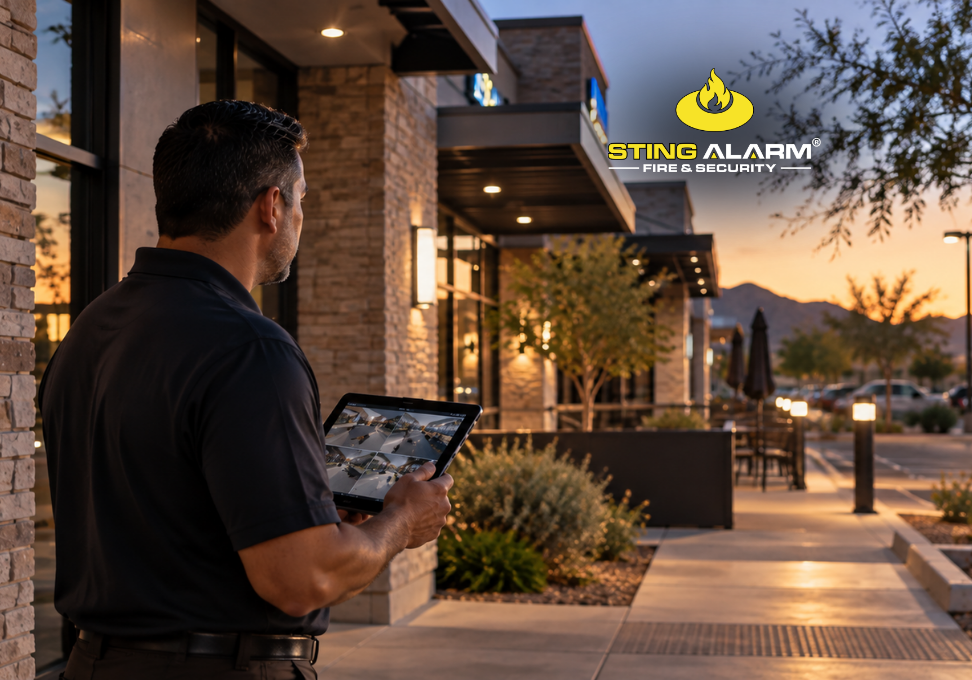
Modern commercial video platforms can make incident review easier by allowing authorized personnel to access recorded footage remotely.
Alarm.com’s documentation, for example, says saved video can be viewed through its app or customer website, and previously recorded clips can be downloaded through the app. Export options for continuous recordings vary depending on the recording hardware and system configuration.
Sting Alarm also offers cloud-managed commercial video surveillance with remote access to live and recorded video. Its business video systems can support single properties as well as multi-location operations.
The practical question for a business is simple: if someone reported an incident today, could the right person find the relevant footage without spending hours figuring out the system?
Recorded Video and Remote Guarding Serve Different Purposes
Recorded video primarily helps businesses review what happened.
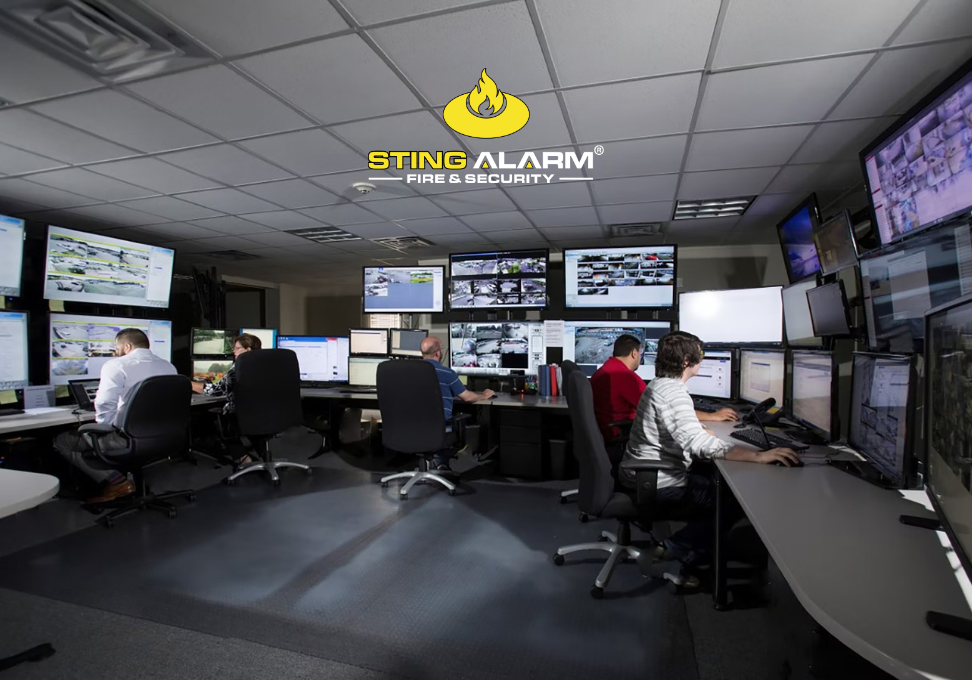
Remote Guarding / Virtual Guard adds a different capability. Sting Alarm’s service combines video analytics with review by a live security professional. When configured activity is detected, the professional can review what is happening and follow the response protocol established for that property, which may include a live audio warning when appropriate.
That does not replace retained video or the documentation process surrounding a liability claim. The two functions address different needs.
A business may use recorded video for incident review while using Remote Guarding / Virtual Guard for specific security events that require live attention.
Build the Process Before You Need the Footage
The time to determine who can access footage, how long it is retained, and which areas are covered is before an incident needs to be reviewed.
Start by looking at the places where customers, employees, vendors, vehicles, and deliveries regularly interact. Then confirm that camera views, recording settings, retention, and retrieval procedures match the way the property operates.
Video cannot guarantee the outcome of a liability claim. What it can do is give your business a clearer record of events when questions arise.
Sting Alarm has served Las Vegas businesses since 2003 and now provides commercial security services in both the Las Vegas and Phoenix markets, including commercial video surveillance and Remote Guarding / Virtual Guard.
Call 702-737-8464 in Las Vegas or 602-431-1300 in Phoenix, or visit our website to request a free quote for your business.